
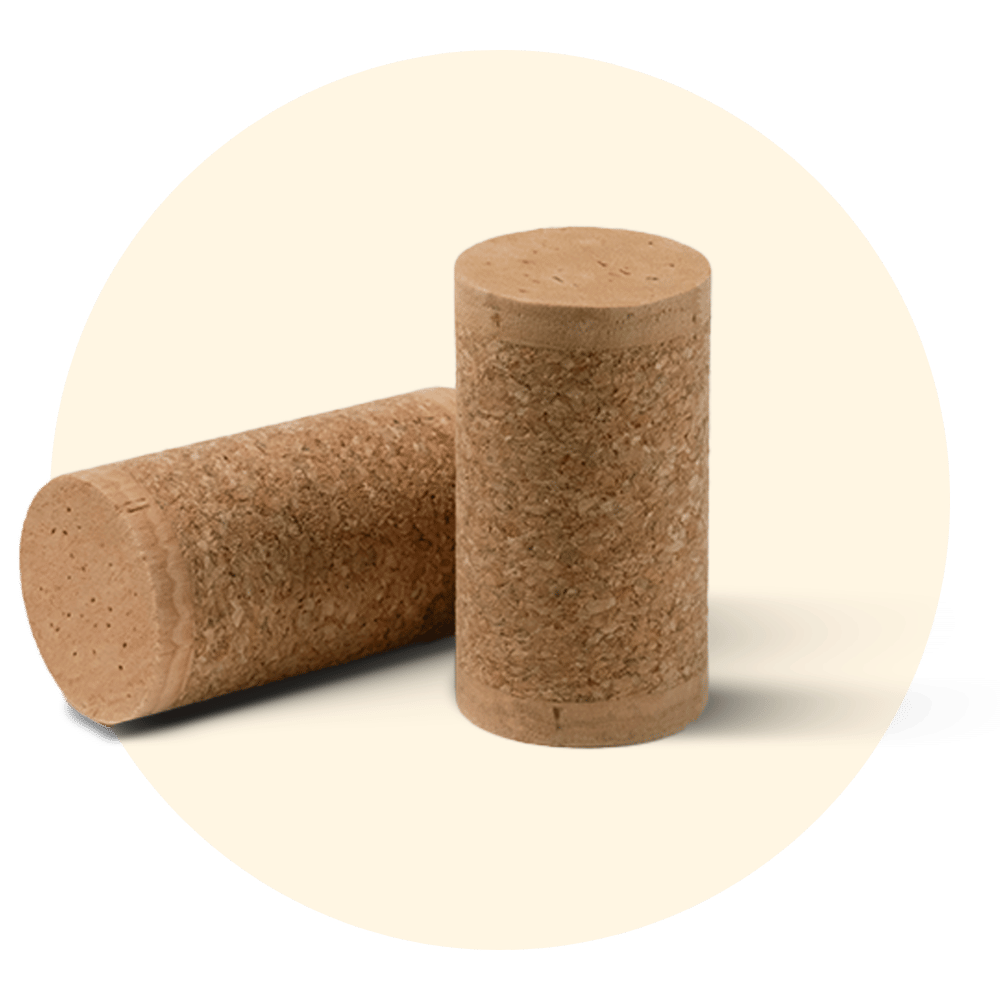
Novatech® Evo is an advanced technical cork stopper designed
for premium wines. It features a micro-granulated cork body
with natural cork discs at both ends, ensuring a high level of
homogeneity and mechanical resistance. This stopper is ideal
for wines with floral and fruity aromas.
One of the standout features of the Novatech® Evo is its
rigorous quality control process, including the exclusive ROSA
technology treatment and X-ray sorting of cork discs.
This ensures a high level of sensory neutrality, with TCA levels
guaranteed to be below the quantification limit of 0.5 ng/L.
Additionally, the cork is 100% recyclable and contributes to
reducing the global carbon footprint of wine packaging.
Its advanced production process and environmental benefits
make it an excellent choice for winemakers seeking a
high-performance, sustainable cork solution.
Also available with FSC® certification.
44 x 24 mm
49 x 24 mm
Up to 10 years
| Characteristics | Parameters | Specifications | |
|---|---|---|---|
| Dimensions |
Length
Diameter
Ovalisation
|
± 1,0 mm
± 0,4 mm
≤ 0,3 mm
|
|
| Physical and chemical properties |
Moisture
Apparent volume mass
Extraction force
Peroxide content
Dust content
TCA (2,4,6 - Trichloroanisole)
|
4 - 9%
250 - 330 kg/m³
15 - 45 daN
≤ 0,1 mg/stopper
≤ 2,0 mg/stopper
≤ 0,5 ng/l**
|
|
| Permeability** |
OIR (oxygen release up to 6 months)
OTR (oxygen transfer after 6 months)
|
44 X 24 mm
1,4 mg O₂
0,06 mg O₂/year
|
49 X 24 mm
1,3 mg O₂
0,04 mg O₂/year
|
*The colors shown in the various washing options are for illustrative purposes only and may not be accurately reproduced in the photographs. Slight variations may occur depending on the type of stopper selected. Portocork cannot be held responsible for these minor variations. We therefore recommend that you take them into consideration when making your final product selection.
**Releaseable TCA content equal to or less than the detection limit of 0.3 ng/l; analysis carried out in accordance with ISO 20752
***Oxygen transmission rate determined as described in P.Lopes; C.Saucier; Y.Glories; J.Agric. Food Chem. 2005, 53, 6967-6973.